Rover – Pet Sitters
- 4.5
- Rating
- 5.00M
- Installs
- Free
- Price

 Analysis by App-foxy
Finding dependable care for a dog is rarely as simple as choosing the closest name on a map. You need to think about the animal’s routine, the caregiver’s experience, timing, communication, and whether the arrangement feels suitable before you hand over the leash. I spent time looking at how Rover brings those decisions into one mobile experience, and my impression is that it works best as a practical starting point rather than a magic solution to every pet-care problem.
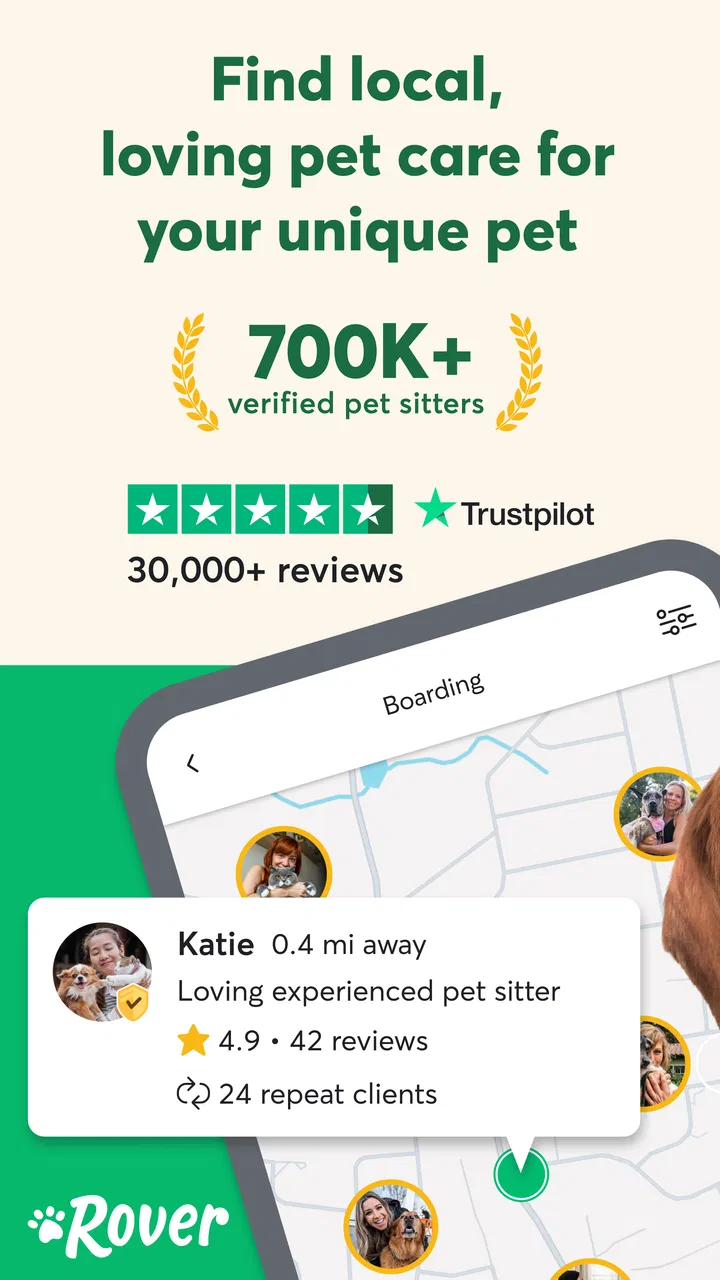
Rover - Dog Boarding & Walking is a free Travel & Local app from Rover.com for arranging neighborhood dog boarding, walking, pet sitting, and doggy day care. Its basic appeal is easy to understand: instead of relying only on a friend, a local noticeboard, or a broad web search, I can explore care options in one place and compare them around the needs of my dog.
The app is available to everyone by age rating, and it has built a substantial audience, with over five million installs. Its average rating is 4.6 from around forty-five thousand ratings, alongside roughly eight thousand six hundred written reviews. Those figures suggest that many owners find the service useful, but they do not remove the need to judge each individual caregiver carefully. A good experience depends on the match, not just on the app’s reputation.
You May Also Like

 Blood Strike: 2.5 Anniversary
Blood Strike’s Loadouts Turn Every Drop Into a Tactical Gamble
A close look at Blood Strike’s custom loadouts: how fast access to signature weapons reshapes its battle royale rhythm, rewards preparation, and narrows the gap between fights.

 Pandora - Music & Podcasts
Pandora’s Music Is Easy to Start, but Harder to Recover
Pandora’s strength is its low-effort path from a seed to a station. Its weak spot is how much confidence it asks you to place in connection, setup, and quiet recovery.

 8 Ball Pool
 Is Built on Rivalries, Rematches, and Routine
A close look at the rivalries, rematches, shared routines, and unanswered safety questions that turn a quick pool match into a persistent mobile community.

 Samsung Music
’s Quiet Strength Is Playing What You Already Own
Its reach comes less from spectacle than from dependable access to a personal library. That simplicity is both the app’s strongest retention engine and its ceiling.

 AccuWeather: Weather Radar
AccuWeather Review: A Quick, Clear Forecast for Everyday Decisions
For everyday plans, the best forecast is the one you can understand quickly. AccuWeather makes rain timing, radar, and local conditions easy to act on, with a few trade-offs.

 Hill Climb Racing
Why Hill Climb Racing Still Turns Crashes Into One More Run
A tiny car, a bumpy hill and one more upgrade: Hill Climb Racing keeps resurfacing because its simple chaos makes every near-miss feel personal.
More From Our News Desk
View All News


How Rover turns a vague pet-care problem into a manageable search
The most useful part of the concept is the way it separates different kinds of help. A dog that needs a midday outing while I am at work has a different requirement from a dog that needs somewhere to stay overnight. Likewise, a nervous pet may benefit from care in a familiar home setting, while a social dog may be happier with daytime company. Having boarding, walking, sitting, and day care represented together makes it easier to begin with the actual situation instead of searching for a generic “dog sitter.”
I would start by defining the occasion before browsing names. For a regular weekday, walking may be the sensible choice. For a weekend away, boarding or sitting deserves closer attention. For a long workday, day care may solve a different problem from a single walk. This sounds obvious, but it prevents a common mistake: choosing the first available service and then trying to force the dog’s routine around it.
The app is also more useful when I treat the search as a conversation preparation tool. Before contacting anyone, I would write down feeding times, medication instructions, exercise preferences, separation concerns, behavior around other dogs, and emergency contact details. The platform can help me locate a potential match, but it cannot replace the information I need to communicate clearly.
What the free download does and does not tell me about cost
The app itself is free to download. That makes it inexpensive to try, browse, and understand before deciding whether the service fits my circumstances. However, free access to the app should not be confused with free pet care. The cost of a booking depends on the care arrangement and the person selected, so I would review the complete amount shown during the booking process rather than assuming that a convenient search result represents the final expense.
This distinction matters when comparing Rover with asking a neighbor or family member. Informal help may cost less or nothing, but it can be harder to organize, less consistent, or uncomfortable to request repeatedly. A professional marketplace can offer a more structured route, yet that convenience has a monetary value. I see the free app as an entry point to paid or arranged care, not as evidence that the care itself is free.
For occasional use, the value question is fairly direct: does the time saved and the access to local options justify the booking cost? For recurring walks or regular day care, I would look at the total pattern over time. A single booking can feel reasonable, while frequent appointments may require a more deliberate budget. Rover helps me investigate that choice, but I still need to make it based on my schedule and finances.
The details I would check before choosing a caregiver
A profile can look appealing and still be a poor match for a particular dog. I would pay attention to whether the caregiver appears comfortable with the dog’s size, age, energy level, and behavior. A calm older dog may not need the same environment as a young dog that pulls, chews, or becomes distressed when left alone. The right choice is not automatically the person with the most convenient location.
I would also use the service type as a way to test the arrangement gradually. If I were leaving my dog with someone new, a shorter daytime service could be a sensible first step before considering an overnight stay. That gives me a chance to see how communication works and how my dog responds. It is a more cautious workflow than making a long booking immediately, especially for an anxious animal.
Another practical tip is to ask questions that expose the daily routine rather than only asking whether the caregiver “likes dogs.” I would want to know how the dog’s walks are handled, whether there are other animals around, how quiet the home is, and what happens if the dog refuses food or becomes unsettled. The app can connect the two sides, but the quality of the arrangement comes from these specific answers.
A realistic example: the workday that runs longer than planned
Imagine I normally finish work in time to take my dog out, but an unexpected meeting extends through the afternoon. I could use Rover to look for a local walk or day-care option instead of sending a last-minute message to several friends. The useful decision would not simply be “who is closest?” I would compare the available service with my dog’s energy, comfort around strangers, and need for a predictable routine.
If the dog only needs exercise and a bathroom break, a walk may be more appropriate than a full day of care. If the dog becomes distressed when alone, a sitter or day-care arrangement may address the real issue better. This is where the app’s range of services has practical value: I can consider different forms of help instead of treating every absence as the same problem.
Before confirming, I would make sure the timing works in real life, not just on paper. I would prepare the leash, food, medication, and instructions in advance, then explain any behavior that could surprise a new caregiver. Rover can reduce the search friction, but good preparation still determines whether the handoff feels smooth.
Where the app is stronger than the usual alternatives
The usual alternatives each solve part of the problem. Friends and relatives may know the dog well, but they are not always available. A local message board may offer more informal choices, but it can require more effort to organize and assess. Calling individual kennels may work for boarding, yet it is less convenient when I am comparing several types of care for one animal.
Rover’s advantage is concentration. Walking, sitting, boarding, and day care appear within the same service, so I can adapt the search to the occasion. That is especially helpful for owners who travel, work changing hours, or have a dog whose needs vary from week to week. It also gives the process a clearer starting point than asking a search engine a broad question and sorting through unrelated results.
That advantage has a limit. A marketplace can show me possible caregivers, but it cannot make a stranger automatically trustworthy or guarantee that a particular dog will settle easily. Someone who prefers a long-standing relationship with one local kennel may find a traditional provider more reassuring. Someone whose dog has complex medical needs may also prefer a specialist they already know, rather than beginning with a general local search.
Small workflow choices that make a big difference
My first non-obvious recommendation is to separate “available” from “suitable.” A person who can accept a booking at the right time may still be wrong for a dog that dislikes other animals, needs medication, or cannot cope with a busy household. I would shortlist based on compatibility first and schedule second, then confirm the practical details directly.
Second, I would avoid treating reviews as a substitute for questions. Written feedback can help reveal patterns in communication or reliability, but it cannot describe every dog’s temperament. A caregiver who is excellent with energetic puppies might not be the best choice for a timid senior dog. I would use reviews to create questions, not to stop thinking.
Third, I would plan for the handoff itself. A short written routine is more useful than a vague instruction such as “he is easy.” I would include normal meal times, preferred walking habits, triggers, comfort items, and the signs that the dog needs a break. This is particularly important when several services are available, because a walk, sitting visit, and overnight stay each create different opportunities for misunderstandings.
Finally, I would keep a backup plan for travel or busy periods. A marketplace search can be convenient, but availability may not match the exact dates I need. If the booking is important, I would begin early enough to consider another caregiver or a familiar alternative. The app is most valuable when it supports planning, not when it is used as a guarantee that a last-minute perfect match will appear.
The friction I would expect as an owner
The main drawback is the responsibility that remains with me. Rover simplifies discovery, but I still need to evaluate profiles, communicate expectations, compare the arrangement with my dog’s needs, and make a careful booking decision. Owners hoping for a completely hands-off experience may find that the app merely moves the work from searching phone contacts to assessing marketplace options.
There is also an emotional trade-off. Leaving a dog with someone new can feel uncomfortable even when the logistics look good. The app can make the process more organized, but organization is not the same as personal trust. A meet-and-greet or trial arrangement may be important for a nervous dog, and that takes extra time before the actual service begins.
Another limitation is that different care types are not interchangeable. A walk does not provide the same supervision as sitting, and day care is not automatically the best answer for a dog that becomes overwhelmed by activity. I would resist choosing the most extensive option simply because it sounds more protective. Sometimes a short, focused service is more suitable and better value.
Who is likely to get the most value
I think Rover is particularly useful for owners who have changing schedules, travel occasionally, or want to find help near home without managing several unrelated searches. It is also a practical option for someone moving to a new area and lacking an established circle of dog-owning friends. The variety of care types makes it easier to handle ordinary disruptions as well as planned absences.
It may also suit first-time users who want to compare possibilities before committing to a long-term arrangement. Starting with a limited service, asking detailed questions, and observing how the dog reacts can turn the platform into a gradual introduction to professional care. That is more sensible than assuming the first promising profile should become the permanent solution.
I would be more cautious if my dog has serious medical requirements, extreme aggression, or a history of severe separation distress. That does not automatically make the app unusable, but it raises the importance of specialist experience and direct discussion. In those situations, a veterinary recommendation, a dedicated trainer, or a trusted provider with a proven relationship may be a better first choice.
Owners who already have a reliable family member, neighbor, or kennel may also have little reason to change. Rover’s value is strongest when it solves an access or organization problem. If the existing arrangement is dependable, familiar to the dog, and affordable, adding a marketplace may introduce more decisions without improving the result.
My verdict on trying Rover
After looking at the app as a real planning tool, I see Rover as a useful bridge between informal favors and traditional pet-care businesses. It gives me one place to explore several kinds of local help, which is more flexible than searching for a single boarding solution every time my schedule changes. The free app makes that exploration easy to begin, while the actual value depends on the booking, the caregiver, and the fit with my dog.
I would recommend it to a dog owner who needs options and is willing to do the important judgment work. My preferred approach would be to choose the service based on the dog’s actual need, ask specific questions, try a manageable first booking, and keep clear instructions ready. That workflow makes the platform more useful than simply selecting the nearest available person.
I would skip it when I already have a trusted solution or when my dog’s needs call for a narrowly specialized provider. I would also avoid relying on it as a last-second guarantee for a complicated trip. In the right situation, though, Rover - Dog Boarding & Walking offers a sensible way to organize everyday dog care, with enough flexibility to be genuinely helpful and enough human judgment required to keep expectations realistic.
Rover.com has maintained the app since its release on August 14, 2013, and the current version is 26.0218.02 for operating systems version 10 or later. Those details matter mainly when checking device compatibility before installing. For an owner whose phone meets that requirement and who wants a free way to investigate local walking, sitting, boarding, or day-care possibilities, I think it is worth trying—provided the final decision is made around the dog, not just around the convenience of the search.
FAQs for Rover – Pet Sitters
01What is Rover and what services does it offer?
Rover is a comprehensive app designed for pet owners seeking reliable care for their dogs. It offers services such as dog boarding, walking, daycare, and house sitting. Users can connect with trusted pet sitters and walkers in their area, providing peace of mind when they can't be with their pets.
02How can I ensure the safety and reliability of the pet sitters on Rover?
Rover prioritizes safety by conducting background checks on all sitters and walkers. Additionally, the app includes reviews and ratings from other users, allowing you to choose a sitter with confidence. Rover also offers premium insurance coverage for all services, enhancing security and trust.
03Is Rover available in my area?
Rover has a wide network of sitters and walkers across the United States and other select countries. The app uses your location to show available services nearby. Before downloading, you can check Rover’s website or app to confirm service availability in your specific area.
04Are there any fees associated with using Rover?
While downloading the Rover app is free, service fees apply when booking a sitter or walker. The cost varies depending on the type of service, the location, and the sitter’s rates. Rover provides a detailed quote before booking, so you can review and agree to the charges beforehand.
05How do I book a service on Rover?
Booking a service on Rover is straightforward. After creating an account, you can search for available sitters by entering your location and desired service. Once you find a suitable sitter, you can view their profile, read reviews, and send a booking request. After the sitter accepts, the booking is confirmed.
Pros
- User-friendly interface for quick navigation.
- Wide network of trusted pet sitters.
- Real-time updates on pet activities.
- Flexible booking and cancellation options.
- 24/7 customer support available.
Cons
- Prices can vary significantly by location.
- Limited availability in rural areas.
- Some users report inconsistent service quality.
- App notifications can be overwhelming.
- Profile verification process could be stricter.

Rover – Pet Sitters
Gallery